- Home
- Home Inspection
- Why You Should Never Skip a Re-Inspection After Builder Repairs
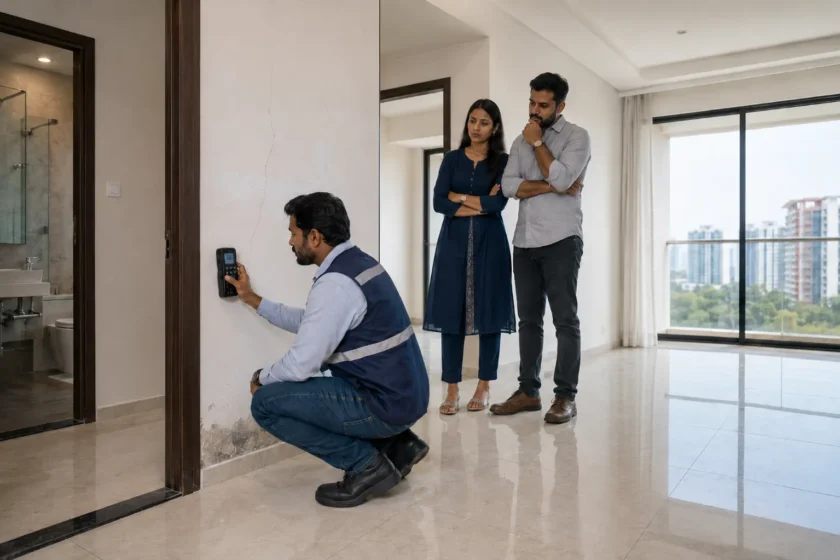
Why You Should Never Skip a Re-Inspection After Builder Repairs
Buying a new flat is one of the biggest decisions you’ll ever make. And when the builder finally hands over a list saying ‘all defects have been fixed’, it feels like a relief. But here’s something most homebuyers in Hyderabad don’t realise: that message from the builder is not the end of the story. It’s actually the moment when you need to be more careful.
Many buyers make the mistake of assuming that once the builder says the repairs are done, everything is fine. They skip the second check, take possession, and move in only to find the same seepage returning within months, or a tile coming loose, or an electrical point that was never properly tested. This happens more often than people think.
That’s exactly why re-inspection after builder repairs exists and why it should never be skipped.
At Handover Expert, we’ve seen this pattern repeatedly while providing home inspection services in Hyderabad. Builders fix what’s visible, but not always what’s causing the problem underneath. A proper re-inspection service gives you the evidence you need before you accept your home. This article breaks down everything you need to know about builder repair re-inspection, why it matters, what it covers, and how it protects your investment.
What Is Re-Inspection in Home Buying and Why Does It Matter?
Re-inspection is simply a second visit by a professional home inspector, done after the builder claims to have fixed the defects found during the first inspection.
Here’s how the process normally works: during the initial home inspection services, engineers identify defects, such as poor plastering, seepage, hollow tiles, misaligned doors, faulty wiring, drainage issues, and document them in a detailed report. You then share this snagging list with the builder. The builder gives it to their team to fix. A few weeks later, they call you and say, “Repairs are done; come and take possession.”
Now, the critical question is, have they actually fixed everything properly?
That’s what a re-inspection answers. The difference between a first inspection and a second visit is the context. In the first round, you’re discovering problems. In the re-inspection, you’re verifying solutions. The inspector checks each defect from the original report and tests whether the repair was done correctly, completely, and with the right materials.
Home inspection second visit after repairs is not about finding new problems (though that can happen too), it’s specifically about confirming that the builder has done what they said they would.
Why Builder Repairs Should Never Be Trusted Without Verification
This might sound harsh, but it’s the reality that anyone who has bought a new flat in Hyderabad will understand that builder repairs are often cosmetic, not structural.
Here’s what typically happens: a contractor is asked to fix a damp patch on the wall. The easy fix? A coat of putty and paint. It looks perfect. But the actual source of the seepage, a crack behind the tile, a faulty waterproofing membrane, or a leaking pipe, is still there. Three months after possession, the patch reappears, worse than before.
This is one of the most common findings during builder rectification checks in Hyderabad. Surface-level repairs that don’t address the root cause.
A few other red flags to watch for:
• Documentation mismatch: The builder’s repair report says 12 items were fixed, but your original snagging list had 19.
• Substituted materials: A broken tile was replaced, but the new tile doesn’t match the original batch.
• Partial fixes: The plumbing pressure issue in one bathroom was fixed, but the same contractor didn’t check the second bathroom.
• Hidden issues untouched: Electrical faults that were flagged but are now “not visible” because the panel cover was simply put back.
Why Re-Inspection Is Important After Builder Repairs Before Possession
Taking possession of a defective home is a legal and financial turning point. Once you sign those possession documents, the burden of proving pre-existing defects becomes significantly harder.
Before possession, you have full negotiating power. The property is still technically the builder’s responsibility. Any issues discovered during re-inspection before final possession in Hyderabad can be formally raised, documented, and rectified at the builder’s cost. After possession, that window becomes much narrower.
Think about the financial risk. If a seepage issue that was “repaired” comes back after you move in, you may end up spending anywhere from ₹15,000 to ₹200,000, depending on the severity of waterproofing treatments, re-tiling, replastering, and repainting. All of this from your pocket, not the builder’s.
Flat re-inspection before possession is your last proper checkpoint. It’s not a formality; it’s the most important thing you can do before signing anything.
Common Defects That Often Remain Even After Builder Repairs
Based on actual property re-inspection findings in Hyderabad, here are the defects that builders most commonly leave unresolved even after claiming they’ve been fixed:
Leakage and Dampness Return
Dampness is the most frequently recurring issue. Builders often apply a damp-proof coating on the surface without fixing the source of a hairline crack in the concrete, a poorly sealed pipe joint, or failed waterproofing on the terrace above. Re-inspection after defect rectification will catch this through moisture metre readings, even when the wall looks dry visually.
Hollow Tiles Remain Unchecked
Hollow tiles produce a distinctive sound when tapped, a sign that the adhesive has failed or the bedding is uneven. Builders rarely re-lay tiles during repairs; they more commonly fill gaps with grout, which doesn’t solve the underlying issue.
Poor Slope in Bathrooms
Water pooling in bathrooms is a chronic problem in many new flats. Correcting the slope requires re-laying the floor, which is expensive and time-consuming. Builders often claim it’s fixed when it isn’t. During re-inspection, we test drainage flow with actual water to confirm.
Door and Window Alignment Issues
Misaligned doors and windows are more than an aesthetic problem; they can indicate frame settling, poor installation, or building movement. A “repaired” door may close properly on the day of inspection, but start sticking again within weeks if the underlying alignment wasn’t fixed.
Electrical Faults
Loose MCB connections, improper earthing, and overloaded circuits don’t always trigger visible signs. Re-inspection after construction defects includes testing all electrical points, switches, and panels to make sure they meet safety standards.
Paint Covering Cracks
Fresh paint is the oldest trick in the book. A crack in a wall gets a smear of putty, a coat of paint, and suddenly it’s “repaired.” A genuine crack requires proper sealing and, in some cases, investigation into whether it reflects structural movement.
What to Check During Re-Inspection of a Flat After Repairs
A structured re-inspection follows the original snagging report, item by item byitemt, em and tests each fix. Here’s what a professional re-inspection covers:
Waterproofing Areas
Terrace, bathrooms, kitchen, and balcony waterproofing points are re-tested. Moisture readings are taken at the original defect locations to confirm dryness.
Bathroom Drainage
Water is poured to test the slope and flow. Drainage time is noted. Traps and joints are inspected where accessible.
Electrical Points
Every switch, socket, and fixture reported in the first inspection is tested. Load-bearing points and earthing continuity are checked.
Tiles and Flooring
Each tile in affected areas is tapped to check for hollowness. Grout lines and edge finishing are reviewed.
Wall Cracks
Reported cracks are checked to see if they’ve been properly sealed or simply painted over. Crack widths are measured and compared to the original documentation.
Door and Window Fittings
Opening, closing, locking, and sealing of all reported doors and windows are checked. Frame gaps and weatherproofing are re-examined.
Plumbing Leaks
Visible joints, under-sink areas, and bathroom connections are re-checked. Water is run through taps and showers to test flow and joint integrity.
Balcony Slope
Balcony drainage slope is re-tested by checking for standing water after a water pour test.
Window Sealing
Gaps around window frames, particularly relevant during Hyderabad’s monsoon, are re-checked to confirm proper sealing.
How Re-Inspection Helps Verify the Builder Has Fixed All Defects
The most powerful thing a re-inspection gives you is documented evidence.
The process works like this: your original inspection report lists defects with photographs, measurements, and descriptions. During the re-inspection, each of those items is revisited, and its current status is documented as repaired, partially repaired, not repaired, or a new issue found.
When builders say “everything is done” and a re-inspection finds 6 out of 18 items still unresolved, that’s not a small discrepancy. That’s a formal basis for delaying possession, for written complaints, and if needed, for RERA action.
Re-inspection after the snagging list in India is particularly important because many buyers receive their snagging response over WhatsApp messages or informal emails. A professional re-inspection service gives you a structured, documented record that holds legal weight.
Can You Reject Possession If Builder Repairs Are Still Incomplete?
Yes, and this is something many buyers in Hyderabad don’t know.
Under RERA (Real Estate Regulation and Development Act), homebuyers have the right to raise defect complaints and demand rectification. The defect liability period in India under RERA is 5 years from the date of possession for structural defects.
If a re-inspection shows that repairs are incomplete, you can formally communicate to the builder that you are not ready to accept possession until the pending items are resolved. This should be done in writing, referencing the re-inspection report.
Can I demand re-inspection before possession? Absolutely. It is your right as a buyer to verify the condition of what you are buying before signing any acceptance documents.
What If the Builder Refuses Re-Inspection or Does Not Fix Defects?
This happens. Some builders delay, deflect, or refuse independent inspectors. Here’s what you can do:
• Put it in writing: Send a formal email or registered letter requesting independent re-inspection before possession.
• Use your inspection report as evidence: The original inspection report, combined with a re-inspection showing pending items, is strong documentation.
• File a RERA complaint: If the builder refuses to address defects or denies access, a complaint can be filed with RERA Telangana.
• Escalate through legal channels: Consumer forum complaints and legal notices are additional options, particularly if safety risks are involved.
How Long After Repairs Should You Schedule Re-Inspection?
For most types of repairs, tiling, plastering, door fitting, and electrical fixes, a re-inspection can be scheduled 7 to 14 days after the builder says work is complete.
For dampness-related repairs, the waiting period should ideally be longer, at least 3 to 4 weeks, and ideally after some rainfall if you’re scheduling during or just after the monsoon.
Home re-inspection services in Hyderabad at Handover Expert are flexible and can be scheduled based on your possession timeline. Our team ensures no corners are cut, even when working within a deadline.
Who Pays for Re-Inspection After Builder Repairs?
The re-inspection service fee is typically borne by the buyer; it’s an independent professional service, similar to hiring a lawyer or a CA for verification work.
However, this cost should be viewed against what you’re protecting. The average re-inspection cost is a small fraction of what a single unchecked repair failure can cost. A recurring dampness issue that requires complete wall treatment and repainting in two rooms can easily exceed the cost of the re-inspection tenfold.
How Many Times Can You Request Re-Inspection From a Builder?
There is no fixed legal limit on re-inspection requests, but practically, each cycle should be tied to a new round of builder repairs. The typical pattern: First inspection → snagging list → builder repairs → re-inspection → remaining issues → final re-inspection → possession.
The answer is ‘as many times as it takes for the property to meet the quality it was promised.
Why Professional Home Inspection Services in Hyderabad Matter
Hyderabad’s real estate market has been one of the fastest-growing in India, particularly in areas like Gachibowli, Kondapur, Hitech City, and Kokapet. With that growth comes a large volume of new handovers and a significant variation in construction quality.
At Handover Expert, our team of experienced engineers brings technical tools, structured checklists, and documented reporting to every re-inspection. We’re based in Gachibowli and serve buyers across all major areas of the city.
Property re-inspection in Hyderabad through a certified team gives you something far more valuable than peace of mind; it gives you documented proof that your home is exactly what you paid for.
Conclusion
Here’s the simple truth: builders are human, contractors take shortcuts, and supervision on large projects is not always consistent. That doesn’t make them dishonest; it just makes verification necessary.
Re-inspection after builder repairs is not a sign of distrust. It’s a responsible, practical step that every homebuyer should take before accepting possession of their new home. It protects your money, confirms your safety, and gives you legal standing if anything goes wrong later.
Never take possession without verifying repairs. Never trust a verbal confirmation or a WhatsApp message saying “all done”. Get a professional re-inspection done, get a documented report, and then make your possession decision from a position of complete information.
Book a re-inspection with the Handover Expert before your next possession date. Call: +91 6303363041 | handoverexpert.com
Frequently Asked Questions
1. Is re-inspection necessary after the builder repairs?
Yes. Builder repairs are often surface-level or incomplete. A professional re-inspection verifies each defect from the original snagging list to confirm it has been properly fixed, not just made to look repaired. Without this verification, you may be accepting a home with unresolved issues.
2. What is the defect liability period in India?
Under RERA, builders are liable for structural defects for 5 years from the date of possession. The strongest position is to catch and document defects before possession, not after.
3. Can I reject possession if the builder doesn’t fix defects?
Yes. You are not obligated to accept possession of a property with unresolved defects. You can formally communicate this to the builder in writing, referencing the re-inspection report that documents pending items.
4. What is snagging and re-inspection in real estate?
Snagging refers to the process of identifying defects or incomplete work in a newly built property. A snagging list is the report of all issues found. Re-inspection is the follow-up check done after the builder claims to have fixed those snagging items.
5. How to document the repair of builder defects?
Documentation should include the original professional inspection report with photographs, written communication to the builder listing defects, the builder’s written response, and a professional re-inspection report showing the current status of each item.
6. Can I demand re-inspection before possession?
Yes. This is your right as a buyer. You are entitled to inspect the property and verify that all agreed-upon repairs have been completed before signing possession documents. This right is supported by RERA.
7. What if the builder refuses re-inspection?
Put your request in writing formally. If they still refuse, this can be escalated to RERA Telangana as a complaint. A builder’s refusal to permit inspection before possession is itself a significant red flag.
8. How to verify the builder has fixed the defects?
The most reliable way is through a professional re-inspection by a certified home inspector who compares the current condition against the original snagging report, including moisture readings, drainage flow tests, and electrical checks.
9. Who pays for re-inspection after the builder repairs?
The re-inspection service is typically paid by the buyer as part of due diligence. The cost is small compared to the financial risk of accepting a home with unverified repairs.
10. How many times can I request a re-inspection from a builder?
There is no fixed legal limit. You can request re-inspection after each round of builder repairs until all snagging items are satisfactorily resolved. If defects remain uncorrected, RERA complaint and legal channels are available.