- Home
- Home Inspection
- 100+ Common Snagging Issues Found in New Apartments
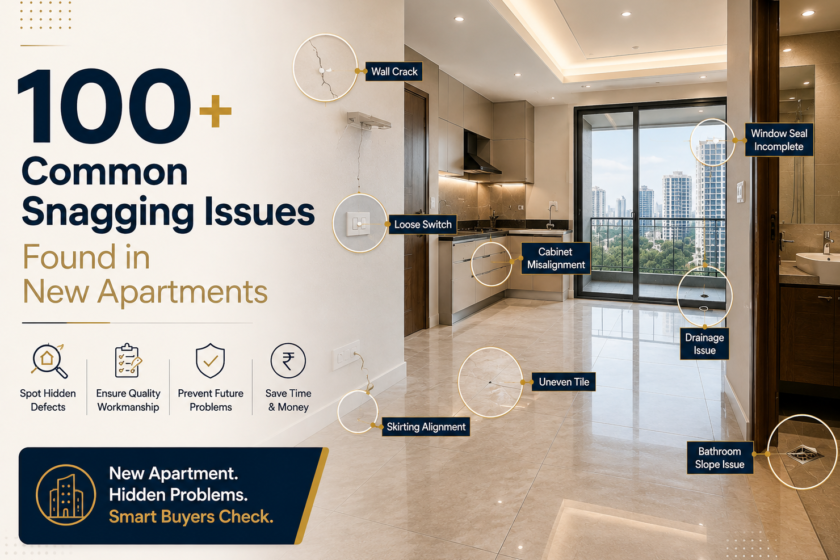
100+ Common Snagging Issues Found in New Apartments
A new apartment rarely arrives as perfectly finished as the brochure suggests. The lobby may shine, the sample flat may look immaculate, and the keys may be presented with considerable ceremony, but the actual apartment can still carry a long list of small unfinished jobs. Some are obvious. Others only show themselves after a tap is used repeatedly, furniture is installed, rain reaches the balcony, or an electrical point is tested under normal load.
That is where Home inspection in Hyderabad earns its place in the handover process. The purpose is not to hunt for microscopic paint marks or manufacture a frightening report. Good snagging is much more practical. It identifies defects that affect usability, safety, durability, workmanship, measurements, and future maintenance, then separates genuine concerns from harmless finishing variations.
After working around new properties, one pattern becomes difficult to ignore: buyers often inspect what is directly in front of their eyes and forget what sits around the edges. The corner behind a wardrobe, the drain below a washing machine, the silicone joint around a window, the slope of a bathroom floor, and the operation of every lock rarely receive equal attention. Those forgotten areas are often where expensive irritation begins.
Why Do New Apartments Still Develop So Many Snags
Large apartment projects are effectively small construction ecosystems. A single flat may pass through masonry workers, plaster teams, tile installers, painters, electricians, plumbers, aluminium fabricators, carpenters, waterproofing contractors, and several finishing crews before the buyer ever walks through the door. Each team can complete its own work correctly while leaving interfaces between trades imperfect.
A common site condition is not dramatic negligence but timing pressure. A plumber finishes a pipe connection, another team closes the surrounding area, the painter touches the surface, and a final cleaning crew arrives. Somewhere along that sequence, a fitting can become loose, a sealant joint can remain incomplete, or a tile can get chipped. Nobody necessarily notices because the next activity has already started. By possession day, the defect looks like it appeared mysteriously.
Buyers sometimes assume that a premium project should have no snags. That expectation sounds reasonable but does not match construction reality. Better specifications can improve materials and workmanship, yet they do not eliminate human handling, coordination problems,s or rushed finishing. A useful inspection therefore measures the apartment against its promised specification and functional requirements, rather than against the unrealistic idea of absolute perfection.
What Experienced Inspectors Check Before Apartment Handover
A serious inspection starts with a slow walk-through rather than immediately opening a checklist on a phone. The apartment is usually divided into zones, and each zone is checked from floor level upward: flooring, skirting, walls, openings, ceiling, electrical points, plumbing fixtures, joinery, and visible service areas. This sounds simple, but the discipline matters because random inspection produces random results.
One of the first things experienced inspectors notice is the difference between a defect and an unfinished expectation. A tiny paint variation may have little operational consequence, while a badly sealed window can become a recurring water-entry problem. A loose switch plate may seem cosmetic until movement begins damaging the electrical box. A cabinet door that does not align properly may indicate nothing serious, but it still deserves recording if the promised finish requires proper alignment.
Documentation also changes the quality of the handover conversation. A statement such as “bathroom leakage” gives a site team very little useful information. A photograph showing the exact location, accompanied by a clear description of the observed symptom, gives the rectification team something actionable. Good snagging records are therefore less about producing thick reports and more about making every reported defect understandable enough to close.
Walls, Floors, Ceilings and Finishes Need More Than Looks
Walls can hide a surprising amount of poor finishing beneath fresh paint. Uneven plaster, repaired cracks, hollow areas, poor corner alignment, and inconsistent surface levels are easier to spot when light falls across the wall from the side. Straight-on viewing often makes a wall appear acceptable. Walking slowly around it while changing the viewing angle can reveal waviness that a quick inspection completely misses.
Flooring deserves a similar treatment. Tiles may be cracked, chipped, unevenly laid, hollow below the surface, poorly grouted, or finished with inconsistent joints. Natural stone and large-format tiles also demand careful attention because slight level differences become obvious after furniture is installed. Bathroom floors deserve additional scrutiny because the issue is not merely appearance. Poor slopes can leave water standing after every shower, gradually turning an attractive bathroom into a permanent housekeeping nuisance.
Ceilings should be checked for cracks, stains, patchwork, uneven paint, service openings,s and signs of moisture. Damp patches are particularly interesting because the visible mark is not necessarily the source of the problem. A stain below a bathroom may originate from plumbing, waterproofing, or a joint above. Good Home inspectionpractice in Hyderabad does not pretend that every visible mark can be diagnosed from a photograph. It records the evidence and recommends appropriate further investigation where necessary.
Doors, Windows and Balconies Reveal Everyday Defects
Doors are often tested once during handover, usually by opening and closing them quickly. That is not enough. Every door should be operated several times, including the bathroom and utility doors. Hinges, handles, locks, latches, door gaps, frames, stoppers, and surface finishes all need attention. A door that closes only after being lifted slightly is not a small inconvenience; it can indicate alignment or installation issues that become more irritating with daily use.
Windows deserve similar scrutiny because they combine moving hardware, glazing, frames, gaskets, drainage paths, and sealant. A window can look excellent and still have a blocked drainage channel or an incomplete external seal. During monsoon conditions, those small omissions become much more visible. Inspectors also look for scratched glass, loose handles, difficult operation, damaged mesh, poor locking, and unfinished edges around the frame.
Balconies create their own snagging story. Drain outlets must be clear, floor slopes should direct water toward those outlets, railings should be secure, and edge finishes should not expose sharp or unfinished surfaces. Buyers frequently concentrate on the balcony view and forget the balcony floor. That is understandable, but a beautiful view does not compensate for standing rainwater, poor drainage, or a sealant joint that starts failing after the first wet season.
Electrical and Plumbing Snags Can Become Expensive
Electrical checks should be systematic because an apartment can contain dozens of switches, sockets, lighting points, appliance connections, and protective devices. A few working lights do not establish that the entire installation is functioning correctly. Loose plates, non-working sockets, incorrect switch operation, missing covers, poorly labelled circuits, and questionable finishing around electrical boxes should all be recorded.
Plumbing requires even more patience. Taps, basins, toilets, shower fittings, kitchen sinks and utility connections should be operated rather than admired. Slow drainage can be caused by debris left during construction, while leakage may only appear after water has flowed for several minutes. A quick visual check at the start of a visit can miss a connection that begins dripping later. This is one reason experienced inspectors spend time actually using fixtures.
The financial impact of these defects varies sharply. A loose handle may cost very little to correct, whereas concealed leakage discovered after wardrobes or kitchen units are installed can involve dismantling, drying, replacement, and repeated labour visits. Home inspection in Hyderabad is therefore partly about timing. Finding a defect before interiors cover the area can save far more than the inspection itself costs.
Bathrooms and Kitchens Deserve Especially Careful Testing
Bathrooms combine water, electrical fittings, floor slopes, waterproofing, sanitaryware, drainage, and ventilation in one compact space. That makes them particularly unforgiving. A toilet may be securely mounted but poorly sealed. A shower may work but leave water outside the intended wet zone. A basin may drain, yet the connection underneath can leak slowly. None of these problems is especially dramatic during a five-minute walk-through.
Kitchen snagging extends beyond cabinet appearance. Shutters should align, hinges should work smoothly, drawers should move without binding, handles should be secure, and shelves should sit correctly. Countertop joints, sink sealing, plumbing connections, and appliance points require equal attention. A cabinet may look beautifully finished from the front, while the area behind it contains a poor service connection that becomes difficult to access after interior work begins.
There is a practical trade-off here. Buyers sometimes push for every cosmetic variation to be corrected immediately, while overlooking defects that could affect future maintenance. That reverses the priority. A slightly uneven silicone bead may be worth recording, but a concealed leak, defective drainage connection, or inaccessible isolation valve deserves considerably more attention. Experienced Home inspection work in Hyderabad focuses on consequences rather than merely counting defects.
Dampness and Drainage Problems Need Early Attention
Moisture defects are among the most frustrating because they can appear, disappear, and return depending on weather and usage. A dry wall on inspection day does not prove that the area is permanently free of moisture. Window interfaces, bathrooms, balconies, utility spaces, and external walls should be examined with that limitation in mind. Staining, peeling paint, salt deposits, swollen finishes, and unusual odours can all provide useful clues.
A proper Dampness inspection in Hyderabad should not be reduced to pointing a meter at every wall and declaring a property healthy or unhealthy. Moisture readings need context. Material type, recent construction activity, ventilation, weather, and nearby wet areas can influence readings. The sensible approach combines observation, appropriate measurement, and technical judgement instead of treating a single number as a final diagnosis.
Drainage is another area where small defects become repetitive daily problems. Balcony drains can collect construction debris, bathroom slopes can be slightly wrong, utility outlets can drain slowly,y and kitchen connections can be poorly arranged. The financial damage may initially be low, but operational inconvenience grows quickly. A home that requires constant wiping, bucket placement, or repeated plumber visits is not functioning as intended, even if the original snag looked minor.
Measurements and Multi-Stage Checks Reduce Handover Risk
Measurements deserve more attention than they usually receive. Furniture planning, kitchen design, wardrobe fabrication, and interior layouts all depend on actual dimensions. A difference of a few centimetres can matter when a built-in cabinet has been designed tightly between two walls. Physical dimensions should therefore be recorded carefully rather than estimated from the floor plan alone.
Area measurement in Hyderabad can be useful as part of this broader verification, particularly where room dimensions or physical areas need to be documented for practical planning. It should not be confused with any legal or contractual definition of apartment area. Carpet area, built-up area, and other stated areas have different meanings, so measurement findings need to be compared with the correct documentation and methodology.
A multi-stage inspection approach in Hyderabad adds another layer of control. Earlier checks can identify issues before finishes conceal access, while a later inspection can assess completed work and services. This is not always convenient, and it may involve additional inspection fees, but the trade-off can make sense for larger projects or properties where construction remains active. Catching a problem before a cabinet, ceiling, or tile layer closes access is generally easier than reopening finished work later.
How Re-Inspection Changes the Final Handover Result
The first snagging report is not the end of the job. It is the beginning of the rectification cycle. Builders may complete most items quickly, but a few defects can remain open because materials are unavailable, the responsible contractor has moved to another floor, or the repair requires coordination with another service. That is normal enough on active projects, but it still needs verification.
Re-inspection in Hyderabad provides that second layer of control. Each original item should be checked rather than assuming that a completed-looking repair has solved the issue. Paint may have been touched up while an underlying moisture source remains. A cabinet may have been adjusted, but it still rubs against the frame. A bathroom seal may look fresh while water continues to drain incorrectly.
This is where the role of Handover Expert becomes practical rather than merely administrative. A strong handover process keeps the original observations visible, tracks rectification status, and checks whether the finished result actually meets the required standard. The aim is not to make the builder’s life difficult. It is to avoid signing off on a list simply because a site representative says, “Done.” A snag should be closed because the defect has been rectified and verified.
Common Buyer Mistakes That Increase Future Repair Costs
One common mistake is inspecting too quickly because possession day feels exciting. The buyer walks through the apartment, photographs the view, checks the kitchen, and signs the paperwork. Later, a loose socket, a blocked drain, or window leakage becomes noticeable. By then, interior work may have started, making access difficult and responsibility harder to establish.
Another mistake is treating every snag with the same urgency. A buyer may spend considerable time arguing over a tiny paint mark while a bathroom floor retains water or a service point remains inaccessible. Cosmetic defects matter, particularly where specifications promise a certain finish, but functional and safety-related issues deserve priority. A sensible report should make that distinction clear rather than creating a hundred-item panic list.
There is also a tendency to trust visual cleanliness. Newly handed-over apartments are heavily cleaned before possession, and that creates a misleading sense of completeness. Construction dust disappears, surfaces shine, and defects become harder to notice. Experienced Home inspection teams in Hyderabad work against that visual bias by testing components rather than relying on appearance. A clean apartment is pleasant; a properly functioning apartment is much more valuable.
Choosing a Sensible Inspection Strategy for Hyderabad
Not every property needs the same inspection depth. A compact apartment nearing final handover may require a detailed final snagging assessment, while a large under-construction property can benefit from stage-based checks. The building’s age, construction stage, promised specifications, visible workmanship, and planned interior work should influence the scope. Buying the cheapest inspection package is not automatically economical if important areas are excluded.
A useful service should provide more than photographs. The report needs clear defect descriptions, locations, supporting images, and sensible priority levels. Technical limitations should also be stated honestly. No responsible inspector can promise that a non-invasive inspection will discover every concealed plumbing, electrical, or structural defect. Claims of absolute certainty should therefore be treated cautiously.
The strongest approach is usually collaborative but independent. The inspection should identify issues without turning every disagreement into a confrontation. Builder teams have their own quality processes, and some defects can be accepted as within specified tolerances. At the same time, buyers should not be pressured into accepting clearly unfinished work simply because a handover date is approaching. Home inspection in Hyderabad works best when evidence, specifications, and actual performance guide the discussion.
Frequently Asked Questions
1. What are the most common snagging issues in new apartments?
The most frequent concerns include uneven tiles, hollow flooring, wall cracks, poor paint finishing, faulty switches, leaking taps, drainage problems, misaligned doors, window sealant defects, cabinet alignment issues, balcony drainage problems, and incomplete finishing.
2. Should snagging happen before taking possession of the apartment?
Ideally, the main inspection should happen while the builder can still rectify defects efficiently. A pre-handover inspection gives the site team a clear list before furniture and interior installations block access. Where the project permits it, earlier inspections can also identify defects before finishes cover them. Final verification should then confirm that reported issues have actually been corrected.
3. Can a new apartment have waterproofing or dampness problems?
Yes. New construction does not automatically rule out moisture-related defects. Problems can arise from plumbing joints, window interfaces, balconies, wet-area treatment, drainage, or external water entry. A damp mark should not simply be painted over. Its source needs appropriate investigation, particularly if the symptom returns or appears near a bathroom, utility area, external wall, or ceiling.
4. How is apartment snagging different from a normal property inspection?
Snagging usually focuses heavily on newly completed workmanship, fixtures, finishes, promised specifications, and handover readiness. A broader property inspection may examine building condition, visible defects, and operational components according to its defined scope. The two services can overlap, but the inspection objective matters.
5. Is a second inspection really necessary after the builder fixes snags?
A second inspection can be valuable because rectification is not always complete on the first attempt. Some repairs create new cosmetic defects, while others address the visible symptom without resolving the underlying issue. A follow-up check creates a clear close-out process. Each original item can be marked as resolved, partly resolved,d or still requiring attention.
6. What should be checked before signing the final handover documents?
The apartment should be checked for major civil defects, flooring, walls, ceilings, doors, windows, electrical points, plumbing, bathrooms, kitchen fittings, drainage, balcony conditions, visible moisture signs, measurements where required,d and promised fixtures. Documents, keys, access devices, and warranties should also be reviewed.