- Home
- Home Inspection
- Structural Defects vs Cosmetic Defects: What’s the Difference?
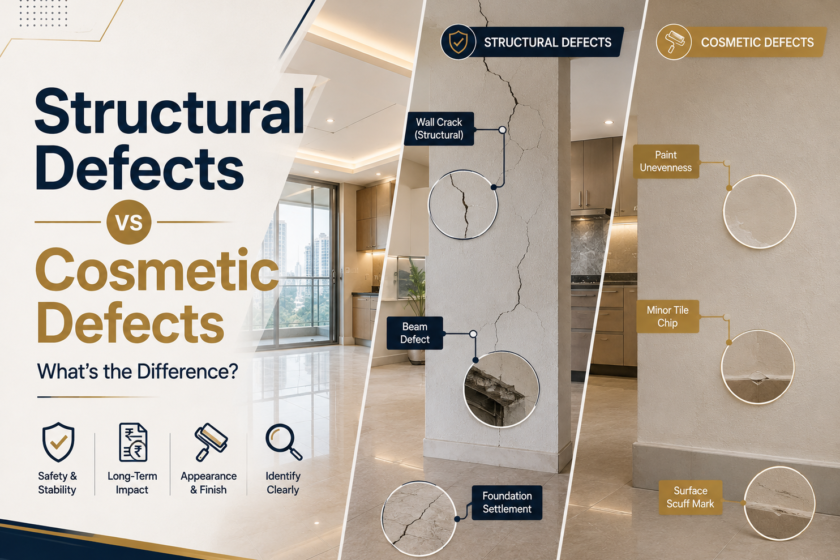
Structural Defects vs Cosmetic Defects: What’s the Difference?
A property can look almost perfect and still have defects that deserve attention. A neat coat of paint, polished flooring, and attractive interiors can hide problems that only become obvious after possession. That is why Structural Defects vs Cosmetic Defects is an important distinction for anyone buying an apartment, villa, or independent house.
A home inspection provides a practical way to look beyond appearance. Structural problems may involve the foundation, beams, columns, slabs, or load-bearing walls, while cosmetic issues usually involve finishes such as paint, plaster, tiles, and surface cracks. The difficulty is that some visible defects can have more than one possible cause.
For buyers searching for home inspection in Hyderabad, the objective should not be to find faults simply for the sake of finding faults. The real purpose is to understand the condition, likely consequences, and repair priorities before money and possession are committed. A sensible inspection separates minor snagging from concerns that may affect building safety, durability, or future maintenance.
Why Structural and Cosmetic Defects Matter Before Buying
The difference between structural defects and cosmetic defects matters because the financial and safety consequences can be very different. A chipped tile may require replacement, while cracking around a structural component could require an engineering assessment. Treating both issues as equally serious creates unnecessary fear, but ignoring the more important condition can create an expensive problem later.
This is where structural vs cosmetic defects should be considered in context. A defect needs to be assessed according to its location, material, pattern, severity, and possible cause. Poor workmanship can create finishing defects without affecting structural integrity. At the same time, water damage or structural movement can sometimes first appear as an ordinary-looking surface problem.
A professional property inspection before buying gives buyers a clearer record of these observations. The report should explain what was seen rather than making dramatic conclusions without evidence. For a buyer, that distinction is valuable because repair costs, negotiation, and possession decisions become easier when defects are properly classified.
Risk starts with correct defect classification.
A useful inspection does not simply count defects. Ten small paint defects may be less significant than one unresolved moisture problem. Similarly, a minor plaster crack should not automatically be compared with deterioration in concrete. Prioritisation is what turns an inspection report into a useful buying tool.
Understanding Structural Defects in Residential Buildings
Structural defects in buildings involve conditions that may affect strength, stability, durability, or structural integrity. The foundation, beams, columns, slabs, and load-bearing walls form important parts of the structural system. Visible problems around these areas should be documented carefully, although the presence of a crack does not automatically prove structural failure.
Possible concerns include foundation settlement, structural movement, concrete deterioration, and exposed reinforcement. Poor workmanship or defective materials can also contribute to long-term problems. In older properties, unauthorised alterations may change how loads are transferred. In newer properties, construction quality and installation practices may deserve closer attention.
The phrase common structural defects in houses should not be treated as a universal checklist. Buildings behave differently depending on design, age, materials, soil conditions, maintenance, and modifications. A structural inspection can identify visible signs that may justify further engineering review, rather than pretending that every structural question can be answered through a basic visual inspection.
Foundation, beams, columns, and load-bearing walls
The structural system deserves particular attention because repairs can become expensive once interiors are complete. Cracks, unusual deformation, concrete damage, or signs of movement around structural elements should be recorded. Where evidence is unclear, specialist assessment is more sensible than guessing from appearance.
How Cosmetic Defects Differ From Structural Problems
Cosmetic defects in buildings generally affect appearance, finishing quality, or usability rather than the main load-bearing system. Typical issues include plaster cracks, paint defects, damaged grout, tile defects, poor sealants, and other finishing defects. These may be annoying, especially in a new property, but they are usually handled differently from structural concerns.
The common cosmetic defects in houses can often be identified during a detailed walkthrough. Uneven paint, chipped tiles, damaged skirting, poor alignment, and surface cracks are common examples. However, a defect that looks cosmetic should not automatically be repaired without considering its cause. Moisture or movement can sometimes appear through a finish before the underlying issue becomes obvious.
This is why building defects need sensible classification. A paint patch may be cosmetic, while recurring paint damage may point towards moisture. A cracked tile may simply be installation damage, while repeated tile movement may deserve closer investigation. The visible finish is only one part of the property condition.
Finishes, plaster, paint, and tile-related defects
For buyers, cosmetic defects still have financial importance. Repairs become harder after wardrobes, kitchens, false ceilings, and furniture are installed. Recording tile defects, plaster problems, and paint defects before handover gives the builder a clear rectification list and reduces avoidable disruption later.
Structural Defects vs Cosmetic Defects in Hyderabad Homes
The practical question of what the difference is between structural and cosmetic defects cannot be answered by looking at one feature alone. A crack’s location, direction, material, recurrence, and surrounding condition all matter. The same visual mark can have different explanations depending on whether it occurs in plaster, masonry, or concrete.
The question of how to tell if a defect is structural or cosmetic also requires restraint. Internet photographs can help explain general patterns, but they cannot replace a site assessment. A qualified inspector can document visible conditions and identify where further investigation may be appropriate.
For buyers considering property inspection in Hyderabad, local property types also matter. High-rise apartments, gated villas, and older independent houses have different construction characteristics and maintenance histories. An inspection should follow the actual property instead of applying the same assumptions to every building.
Why location and building behaviour matter
The best inspection combines observations rather than relying on one defect. Cracks, dampness, floor levels, doors, windows, and visible structural components can provide useful context. If several signs point in the same direction, further assessment becomes more reasonable.
How Cracks Reveal Possible Property Problems
There are many types of cracks in walls, and they cannot all be placed into one category. Fine surface cracking can develop from plaster shrinkage or finishing work. Other cracking may relate to movement, settlement, moisture, or material behaviour. The pattern provides information, but it does not automatically establish the cause.
The distinction between hairline cracks and structural cracks is often misunderstood. Crack width alone does not determine whether a defect is serious. A small recurring crack associated with movement may deserve more attention than a larger but stable surface crack. Diagonal cracks in walls and horizontal cracks in walls should similarly be assessed in context.
The phrase dangerous cracks in walls can also create unnecessary alarm. Not every diagonal or horizontal crack is dangerous. Conversely, unusual cracking should not simply be covered with putty and paint. During a structural inspection in Hyderabad, crack location, surrounding materials, moisture, and signs of movement should be considered before deciding on the next step.
Reading crack patterns without unnecessary panic
The question of whether foundation cracks are structural or cosmetic is especially important for buyers of independent houses and older properties. A visible crack near a foundation does not automatically mean foundation failure. The surrounding building condition and evidence of movement need to be considered before reaching a conclusion.
What a Professional Home Inspection Can Identify
A professional home inspection reviews accessible parts of the property according to an agreed scope. This can include walls, ceilings, floors, doors, windows, plumbing fixtures, electrical points, moisture-prone areas, and visible structural components. The aim is to document the condition rather than make unsupported claims.
A key question for buyers is: can a home inspection detect structural defects? It can identify visible signs that may indicate structural concerns, but concealed defects cannot always be detected through a normal visual inspection. Where a condition suggests possible structural movement or deterioration, a qualified structural engineer may need to carry out an additional assessment.
The term home inspection defects covers a broad range of observations. A useful report separates finishing problems from possible technical concerns and identifies practical priorities. For buyers, that makes the report easier to discuss with a seller, builder, or contractor and easier to use when planning repairs.
Inspection evidence versus engineering diagnosis
A responsible inspector should explain limitations clearly. Concealed reinforcement, hidden plumbing, inaccessible waterproofing, and covered structural elements may require specialist testing. Honest reporting is more useful than claiming that a visual inspection can reveal everything inside a building.
Defects to Check Before Buying a Property
The defects to check before buying a property extend beyond visible walls. Bathrooms, balconies, flooring, ceilings, doors, windows, drainage, plumbing fixtures, electrical points, sealants, and moisture-prone areas all deserve attention. A property can look excellent during a short viewing while still having several small workmanship issues.
A pre-purchase home inspection is particularly useful before expensive interiors are installed. Damaged tiles are easier to replace before cabinetry arrives. Moisture is easier to investigate before false ceilings are closed. Finishing defects are easier to photograph and rectify while the builder’s teams are still active.
The same principle applies to home inspection before buying a house. Older properties may require attention to previous alterations, foundation conditions, moisture, and deterioration, while new properties may have more finishing and construction-related defects. The inspection scope should match the property’s age, type, and condition.
Practical checks before purchase and handover
A pre-handover inspection in Hyderabad can create a clear record of the apartment’s condition before possession. For projects where different construction elements become accessible at different stages, a new home inspection in Hyderabad may also be planned around the construction or handover schedule.
Why Hyderabad Buyers Need Detailed Property Inspection
Hyderabad’s property market includes premium high-rise apartments, gated communities, villas, and independent homes. Each category brings different inspection considerations. Apartments may need close attention to wet areas, balconies, windows, flooring, plumbing, and common service interfaces, while independent houses may require more attention to terraces, external drainage, and alterations.
An apartment inspection in Hyderabad should therefore be based on the actual unit rather than a generic checklist. A flat inspection in Hyderabad can cover accessible finishes, fixtures, and visible conditions, while a broader building assessment may involve common areas depending on the agreed scope.
A building inspection in Hyderabad is also useful for understanding wider building conditions, but private apartment inspection and common-area inspection should not be confused. Buyers should confirm what is included before booking. Clear scope prevents misunderstandings and ensures the inspection effort is focused on relevant risks.
New apartments, older homes, and local conditions
For buyers arranging a home inspection in Hyderabad, timing can make a major difference. Inspection before possession gives greater opportunity to document defects while rectification teams are available. It also reduces the chance of discovering problems only after interiors have been completed.
Repair Costs, Property Value and Final Decisions
The financial impact of defects depends on the underlying cause. A paint repair may cost little, while persistent water damage can involve waterproofing, plaster replacement, and repainting. A possible structural issue may require specialist investigation before repair costs can even be estimated accurately.
This is why property defects should be assessed according to priority rather than quantity. A long list of small finishing issues does not necessarily indicate a poor property. On the other hand, repeated construction defects across several areas may indicate poor workmanship and deserve more serious discussion before purchase.
A home inspection in Hyderabad can help buyers understand how defects may affect property value, future maintenance, and repair costs. Inspection does not decide whether a property should be purchased. It provides information that supports negotiation and helps buyers understand what they are actually accepting.
Conclusion
The difference between structural and cosmetic problems is not simply about how a defect looks. Structural defects can affect building safety, stability, or durability, while cosmetic defects generally affect appearance and finishing. Some visible problems are straightforward to repair, while others require further technical investigation.
For anyone considering a property purchase, the most useful approach is evidence rather than panic. Cracks, dampness, uneven floors, damaged tiles, and other observations should be considered according to location, material, movement, and likely cause. A good inspection separates routine snagging from issues that could affect long-term ownership.
A professional home inspection in Hyderabad can make that process clearer for buyers, investors, and homeowners. Handover Expert can help document the property condition and identify defects that deserve rectification or further assessment. Contact the team for a quote before purchase or handover and make the decision with a clearer understanding of the property’s actual condition.
Frequently Asked Questions
1. What is the difference between structural and cosmetic defects?
Structural defects may affect the strength, stability, or durability of a building, while cosmetic defects mainly affect appearance or finishing. Cracks, dampness, and uneven surfaces need context because their visible appearance does not always reveal the underlying cause. Professional inspection can help determine which defects require routine repair and which need further technical assessment.
2. How can buyers identify structural defects in a property?
The best approach is to look for patterns rather than relying on one crack or mark. Signs such as unusual movement, significant cracking, concrete deterioration, deformation, or related floor and wall changes may require closer assessment. A professional inspection can document visible signs and recommend a structural engineering review where necessary.
3. Are hairline cracks always cosmetic?
No. Many hairline cracks occur in plaster or surface finishes, but crack width alone cannot determine the cause. Location, direction, recurrence, moisture, and movement should also be considered. A recurring crack or one associated with other changes in the property deserves closer attention rather than being automatically dismissed as a cosmetic issue.
4. Can a home inspection detect structural defects?
A home inspection can identify visible signs that may indicate structural concerns, but it cannot guarantee detection of every concealed defect. Hidden reinforcement, inaccessible foundations, and covered structural elements may require specialist investigation. If an inspection identifies potential structural movement or deterioration, a qualified structural engineer can provide a more detailed assessment.
5. What defects should be checked before buying a property?
Buyers should review walls, ceilings, floors, bathrooms, balconies, windows, doors, tiles, plumbing fixtures, electrical points, drainage, and moisture-prone areas. Visible cracks, water damage, poor workmanship, defective finishes, and unusual movement should be documented. A pre-purchase inspection helps identify these conditions before registration and expensive interior work.
6. Why is property inspection important before buying a house?
Property inspection provides documented information about the physical condition before a major financial commitment. It can reveal construction defects, cosmetic issues, moisture concerns, and signs that may require specialist review. The findings can support negotiation, repair planning, and handover decisions while reducing the chance of unexpected repair costs after possession.